Data Sheet
Digital Sensors
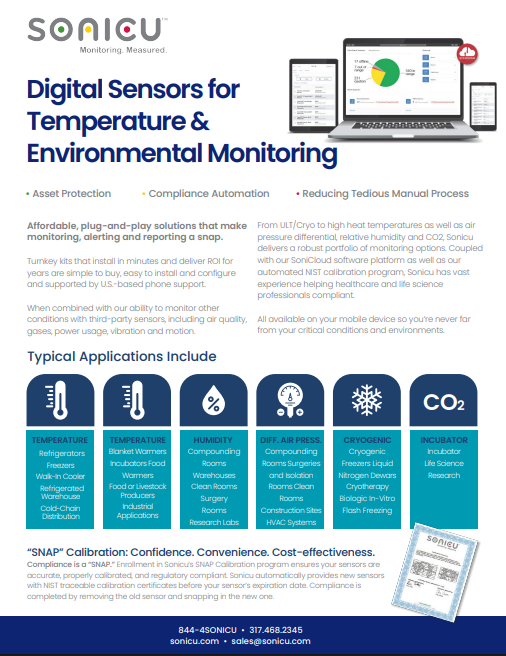
Browse our selection of digital sensors compatible with the SoniShield Duo and SoniShield View meters.
Download Data Sheet
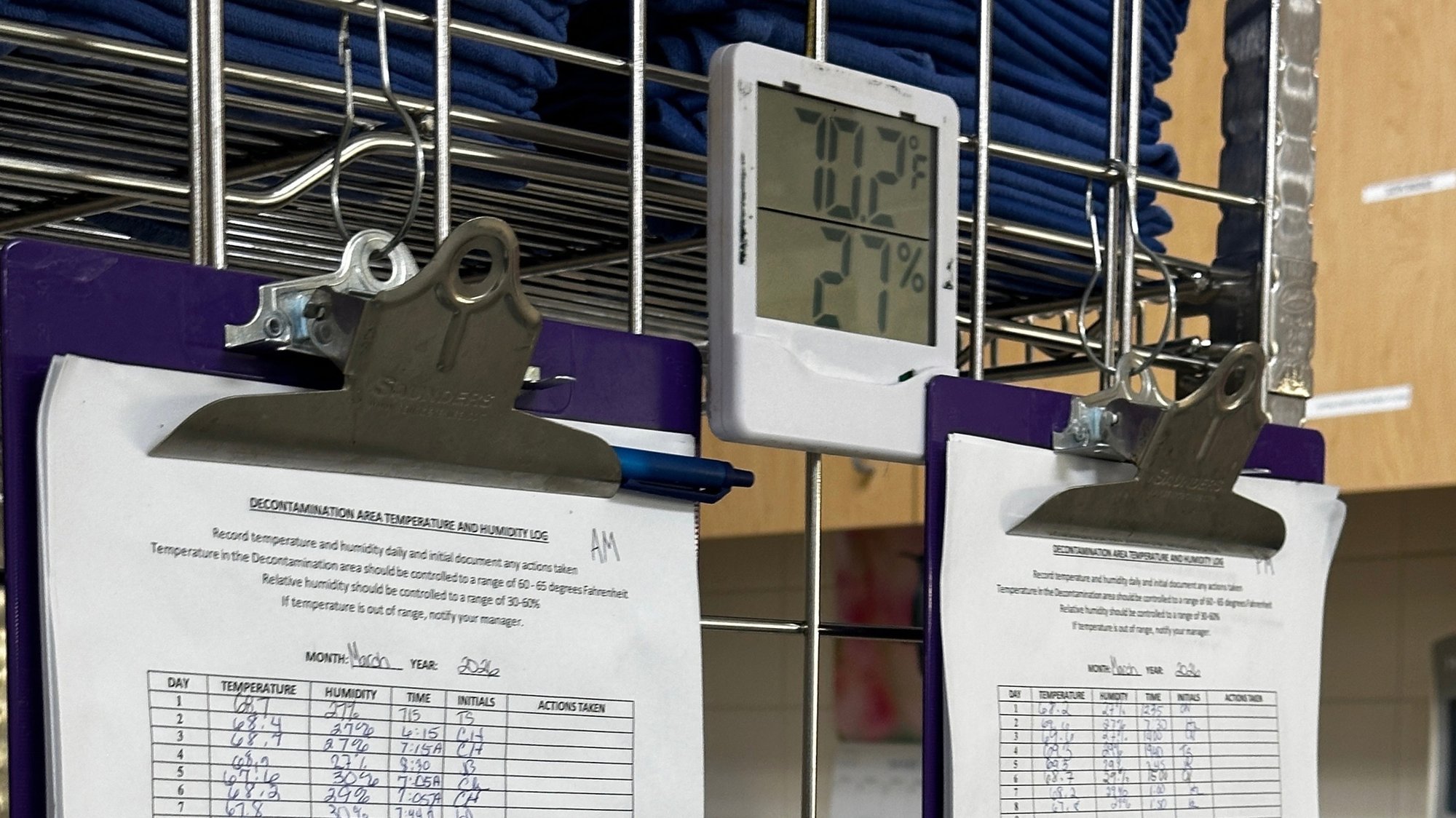
Before Sonicu, Pulaski relied on manual temperature checks, paper logs, and a loud on-site buzzer. The problem? Manual systems only document issues after they happen. They can’t alert anyone when the building is empty.
With kitchen operations ending at 6 pm and limited weekend staffing, equipment failures could go unnoticed for hours or even days. For a hospital storing high-dollar medications and food for immunocompromised patients, the risk was simply too high.

What started as a need in dietary services has grown into a hospital-wide solution spanning from the pharmacy to operating rooms and beyond. At Pulaski Memorial Hospital, a community hospital in Winamac, Indiana, Sonicu is an essential tool for protecting everything from high-dollar pharmaceuticals to patient meals.
Before Sonicu, Pulaski's approach to temperature monitoring relied on manual temperature checks, a loud on-site buzzer, and paper logs. The critical gap: manual logs can only document problems after they've already happened. They can't prevent disasters, and they certainly can't alert anyone when the building is empty.
"In a hospital setting, you can't afford to discover a freezer failure after the fact." With the kitchen closing at 6 pm and staff off on weekends, equipment could fail for extended periods before anyone knew. For a hospital storing expensive medications and food for immunocompromised patients, the risk was unacceptable.
Maggie discovered Sonicu years ago at an HPS meeting. As a long-time HPS member who serves on the food service committee, she's always looking for vetted partners who understand healthcare needs. When she saw Sonicu, the fit was obvious.
What started in dietary services eventually caught the attention of other departments. A couple of years after Maggie's initial implementation, the pharmacy department decided they needed temperature monitoring too. That's when things got interesting.
"Pharmacy came to me and said they're getting a new system. They use it in their refrigerators, freezers, patient refrigerators, and the medical office units. And I said, 'Well, I already use that product.'" Rather than each department going it alone, Maggie helped connect the dots.
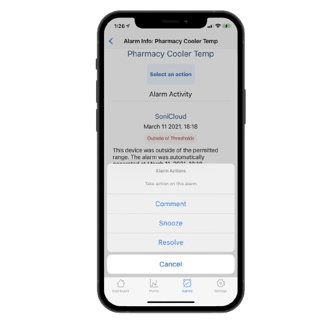
The real game-changer is after-hours monitoring. With the kitchen closed and staff gone home, Sonicu becomes the hospital's night watchman.
"If it's after hours, that's our big one. Alerts go to myself, go to the maintenance person that's on call, and it goes to security. We have eyes almost 24/7 on our refrigeration. And that's important with pharmacy and in our department because we've got some high-dollar drugs that need to keep cold and frozen. Same with food."
The weekly reports show cooler performance, downtime duration, and temperature trends, but Maggie doesn't just wait for the weekly summary.
"Other than the reports they send me every Monday, I can go in there and look on a daily basis." The platform is user-friendly enough that she can check anytime, anywhere.
The granular data has proven invaluable for troubleshooting and even preventative maintenance. For example, when temperatures wouldn't drop properly, maintenance used the detailed graphs to diagnose the issue.
"When they climbed up on top, they found the condensers were frozen. So the freezers and coolers won't operate properly."
The precise temperature tracking shows exactly when the problem started, helping them pinpoint the root cause. Together, Sonicu's alarm features and historical data document excursions triggered by equipment failures. This helps indicate when a freezer may be on its last legs and requires replacement.
For regulatory compliance, Sonicu provides bulletproof documentation. "I save all my Sonicu temps, the summaries, and reports. I'll be able to pull those temperatures out and put them in my documentation to help back up what my staff is doing. That makes it so we don't get a tag for missing temperatures."
For Maggie, it all comes down to confidence: "If I had a cooler that really wasn't functioning, I would not feel safe as a manager being able to prepare safe foods for our high-risk patients effectively. It gives me the confidence that my coolers are working."
While the hospital still maintains manual logs twice daily, Sonicu provides verification. "I can go back and look at the timeframe to make sure they're doing accurate recording. If I have missing temps once in a while, I can use Sonicu records to fill in those temperature times."
Nearly seven years in, Pulaski Memorial Hospital continues to expand its Sonicu footprint. In 2024, they added Glycol and Display monitoring. In June 2025, they installed SoniShield Views in both operating rooms.
"I always tell people, 'You will not regret bringing them into your facility.' It's a fair cost for a superior product."
From dietary to pharmacy to surgical services, Sonicu has become the hospital's temperature monitoring backbone. "To me, it's a very inexpensive cost to have Sonicu in your facility. Just the prevention of loss and being able to document for state and federal surveyors—you can look for any trends and see that our coolers are being kept at the right temperatures."
The system's footprint is minimal, too. "Those little boxes are small. You don't know they're there. They're just out of the way. It's no big, bulky equipment. It's Wi-Fi. And it's just not that expensive a year to have that little peace of mind."