
Identifying Open Door Threats in the OR to Reduce Surgical Site Infections
Operating rooms may be among the most tightly regulated environments in healthcare facilities, Sonicu helps ensure they're safe and monitored correctly.
Learn more

Sonicu offers a comprehensive suite of monitoring solutions
that help organizations safeguard assets, automate compliance and reduce manual processes.
From protecting vaccines and research materials to safeguarding food service and facility operations, Sonicu’s monitoring applications cover temperature, humidity, pressure, and more. Whether you’re in healthcare, life sciences, food safety, or other industries, Sonicu provides visibility, compliance, and peace of mind across all your critical applications.
Designed with safety, efficiency and compliance always top of mind, we’ve evolved over a decade with continuous improvements from customer feedback. Serving the healthcare, research and food service industries.
Whether you're solving basic temperature monitoring needs or managing complex, multi-environment compliance, Sonicu’s full line of meters, sensors, and hubs has you covered.
Connect SoniCloud to the systems that power your operations. From BMS and pharmacy workflow software to lab management tools and third-party sensors, our flexible integrations help you centralize data, automate compliance, and boost operational efficiency.
Sonicu offers a comprehensive suite of monitoring solutions
that help organizations safeguard assets, automate compliance and reduce manual processes.
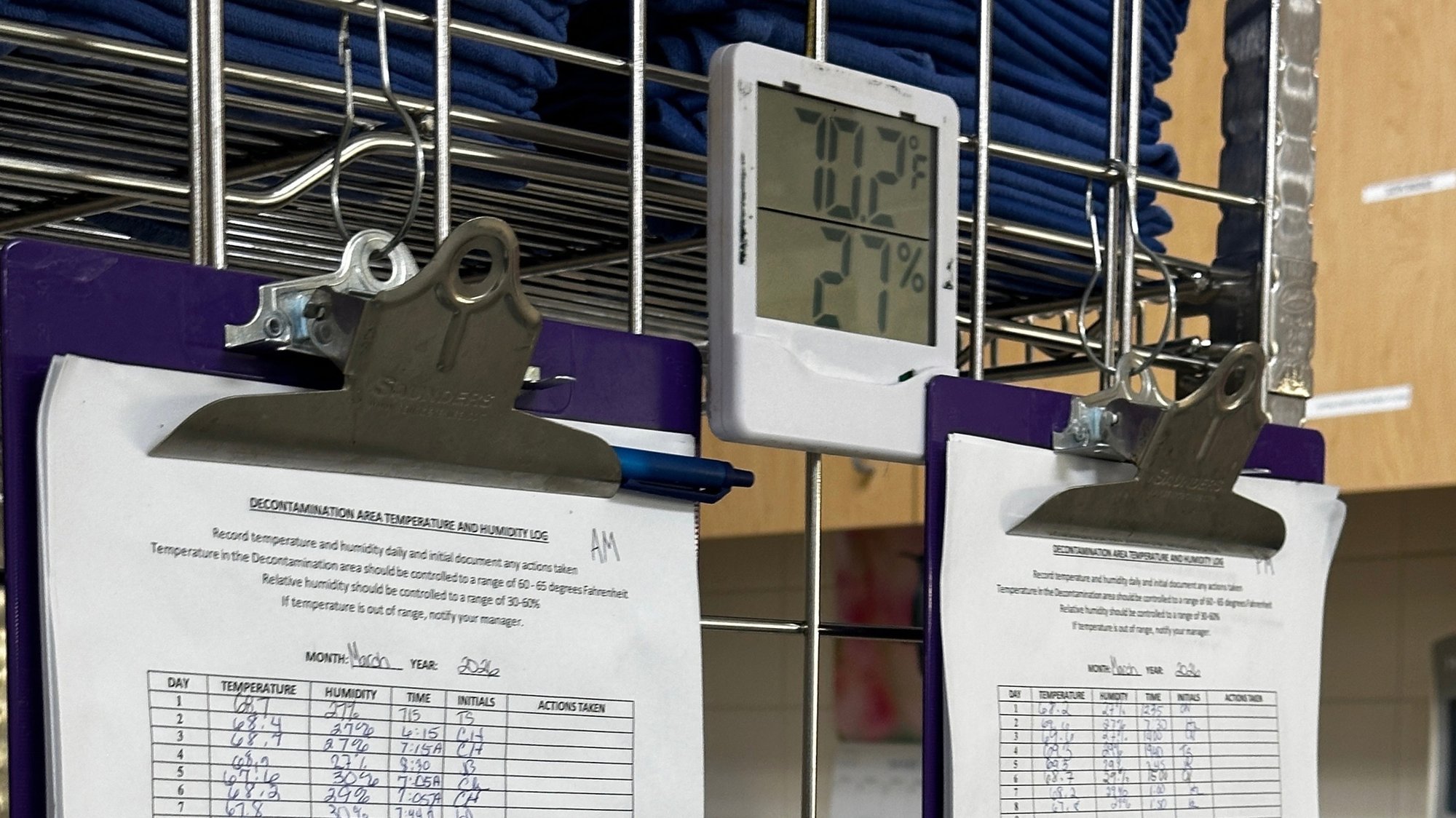
Still using paper temperature logs? Learn the hidden costs.
View Latest Blogs
According to research, the global healthcare sector is set to reach over $10.059 trillion by the end of 2022 and is one of the most crucial contributions to society, which needs to be regulated to ensure the safety and care of millions of patients worldwide.
The tiniest details, ranging from protecting confidential data and ensuring accurate documentation to performing safety-critical procedures, must be kept in check.
Like every industry, healthcare has its own set of rules and regulations to ensure everything runs smoothly.
Thus, healthcare compliance concerns the legal, ethical, and professional standards that all people and processes in the sector must adhere to. These mandates are complex in nature and subject to frequent change, requiring shifts in the operational workflow and more.
Including a virtually never-ending list of elaborate rules and regulations, healthcare compliance can be somewhat challenging to understand. However, with the help of the few key examples listed below, you will be able to familiarize yourself with the subject.
Social Security Act: Reviews funding and other essentials for the Child Health Insurance Program, Medicare, Medicaid, and more.
Health Insurance Portability and Accountability Act (HIPAA) – 1996: This particular statute aims to protect patients' privacy by requiring organizations to ensure the security of patients' medical data.
Health Information Technology for Economic and Clinical Health (HITECH) Act: An extension of HIPAA, this law was enacted in 2009 and sets compliance standards for health IT, including electronic health records.
Physician Self-Referral Law (Stark Law): Under this act, physicians are prohibited from referring their patients enrolled in Medicaid or Medicare to a medical entity or provider with whom the physician or a member of their household has a direct financial relationship.
False Claims Act: Under this act, it is illegal for medical providers to make false claims to a federal payer. It also allows those not directly affiliated with the government (such as relators or whistleblowers) to take the offender to court on behalf of the U.S. government.
Anti-Kickback Statute: The goal of this ordinance is to promote medical decisions independent of financial constraints or benefits. Thus, under this act, medical care providers and organizations are prohibited from receiving monetary profit from patient referrals if all treatment is provided by the federal government.
Interoperability and Patient Access Final Rule: This rule gives patients greater control over and access to their electronic health information.
Patient Protection and Affordable Care Act: To protect patients' social and financial rights, this rule was recently implemented to provide a modern approach to insurance and Medicaid.
Hospital Price Transparency Final Rule: Aiming to ensure that medical treatment does not cost patients an arm and a leg, this rule requires hospitals and medical care organizations to fully disclose their costs and health plan information.
When it comes to monitoring compliance standards, a few authorities stand out, including the Food and Drug Administration (FDA) and the Drug Enforcement Administration (DEA).
These are responsible for regulating the distribution and manufacturing of medical services, medications, and biological services, and ensuring their safety from the manufacturing and shipping to the point of injection.
As mentioned, healthcare compliance is essential to ensuring all processes run smoothly without hindrance. Besides that, complying with healthcare statutes brings many benefits, not only for patients and medical care organizations but also for the federal government.
Healthcare compliance keeps a vigilant eye on the industry's monetary system, preventing the misuse of commercial insurance dollars and keeping the sector free from corruption.
In the healthcare sector, billing and medical coding issues can arise and be detected earlier with a state-of-the-art compliance program, which can then be resolved.
Moreover, compliance programs help organizations build a positive image by demonstrating that the hierarchy and its employees pay close attention to patients' rights and are fair and just in all dealings. Other than that, healthcare facilities can avoid unnecessary government sanctions by adhering strictly to the drafted rules.
Since the main objective of healthcare compliance is to protect patients' rights, there is no doubt that an effective compliance program will enhance an organization's credibility. Patients will be more inclined to opt for healthcare when they know everything is working in their favor.
To assess a healthcare facility's performance, it is crucial to have a well-established compliance reporting process.
Compliance with federal or state standards is demonstrated by writing compliance reports and presenting statistics to qualified auditors appointed to review them. After a thorough process, these professionals pass the verdict on whether the healthcare facility is actually complying with the rules.
However, there is no hard-and-fast rule for drafting a compliance report, and the format varies from one organization to another and from state to state.
Nonetheless, it is of utmost importance that your healthcare facility adheres to the report structure and the information desired by the individuals responsible for your compliance standards.
Compliance reporting requires facilities to focus on effective protocols and documentation, which not only helps keep everything organized but also improves their communication and collaboration with other healthcare providers.
Additionally, if any unforeseen problems arise, the organization is ready to present its documented proof, thereby simplifying the process.
On top of that, maintaining a good record will also open the doors to new and improved opportunities for the organizations when federal agencies update their compliance standards.
An effective compliance management system also enables organizations to weed out suspicious activity, thereby reducing the prevalence of illegal and unethical conduct to a great extent.
The most significant goal of any healthcare facility is to make their patients feel protected, comfortable, and cared for at all times, and staying on top of compliance reporting practices can help ensure their exemplary care, provide patients with error-free diagnosis, and the proper treatment for their ailments.
Although compliance reporting may seem daunting for healthcare organizations, it has become easier with technological advancements.
At present, a wide range of software is available to help medical care providers, facilities, and organizations monitor their systems.
However, finding the ideal technology stack for your organization can be challenging, as you must ensure that all its characteristics and functionalities align with your requirements and your staff's expertise, while also effectively monitoring the reporting process.
Healthcare organizations must keep detailed records of their data, whether it includes patient databases, device performance, proper medication and machine storage for diagnosis or treatment, or interactions among healthcare providers.
Since we are in the 21st century, it is fitting that this entire system be automated, making software use absolutely crucial. Not only this, but the computational properties will help keep issues such as human error and potential communication breakdown at bay by notifying the organization beforehand.
Other than that, the use of technology helps facilities save the money and time they spend on manual processes for compliance reporting, such as data logging, medical coding, billing, and report making.
An example of a versatile, easy-to-operate software is Sonicu.
It is a Cloud-based platform hosted on Amazon Web Services that takes the burden of monitoring systems, collecting and managing data, and handling compliance reporting off the organization’s shoulders, so they can focus their precious time on other important tasks.
This robust software offers its users the following outstanding features:
24/7 monitoring and recording of various medical machinery and their characteristics, such as temperature, sound, humidity, and air pressure.
Detailed reports on the operations of cold/frozen storage and sensitive environments to help track monitoring and how well you are staying within thresholds.
Monthly data logs with proper visualization of the workings of the system
Weekly summary for all the connected devices
Users can connect the monitoring system to smart tools that process the incoming data at high speed and produce reports that will showcase the organization’s compliance with healthcare standards.
It can be coupled with a top-notch calibration program, ensuring the NIST compliance of the sensors and probes
The software includes an alarm feature that notifies the user if any connected system exhibits unusual activity.
Analytical data output enables users to make informed decisions.
The SoniCloud Dashboard allows you to connect the monitoring system to your personal devices, such as a desktop and a smartphone, to keep a vigilant eye on what is going on.
The DataSync feature ensures that you do not lose your precious data to any unforeseen interruptions, such as power loss.
All these features make the program an ideal choice for healthcare compliance reporting. Moreover, you can also take advantage of the following features when you opt for a Sonicu subscription:
Sonicu is an IT company that handles all aspects of remote monitoring applications, from A to Z, using its integrated software to help clients manage and protect their company's environment, assets, and processes.
Producing precise, real-time data and fail-proof alarm systems, Sonicu's sensors detect everything from a rise in temperature to a dangerous increase in relative humidity.
All of these prominent features allow businesses and other facilities, such as healthcare, to stay on top of their management and compliance standards.
Moreover, Sonicu enables its clients to devise a custom plan that meets their specific needs and helps improve, saving precious time, effort, and money.
Not only that, but supervisors can stay stress-free by monitoring their work environment from the comfort of their homes or on the go via their personal devices, and can prevent any mishaps early on.
One of Sonicu’s core objectives is its customer service.
Their high-class support professionals are always on standby, ready to assist with any issues that arise, even after the installation of the entire system – this ensures that everything runs smoothly and patients receive the exemplary care they deserve.
Without a doubt, compliance reporting is a crucial process in any industry, especially in the healthcare sector, which revolves around high-risk, safety-critical processes.
Complying with federal standards not only benefits the facility but also its patients, who can expect to receive exemplary treatment at all times.
Thus, to keep things aligned, it is crucial to keep a vigilant eye on all systems tied to the healthcare network. The daunting task of compliance reporting in healthcare can be made easier with the help of the software programs available today.
However, Sonicu is the best fit for healthcare compliance reporting due to its distinguishing characteristics.
With the SoniCloud Dashboard, monitoring the healthcare facility is easier, with 24/7 access to data on any device.
This not only helps ensure the healthcare facility is functioning as needed but also enables data analysis and more effective decision-making to enhance the facility's efficiency in the future.
Subscribe to our newsletter for expert insights, product updates, and strategies to keep your operations running smoothly.