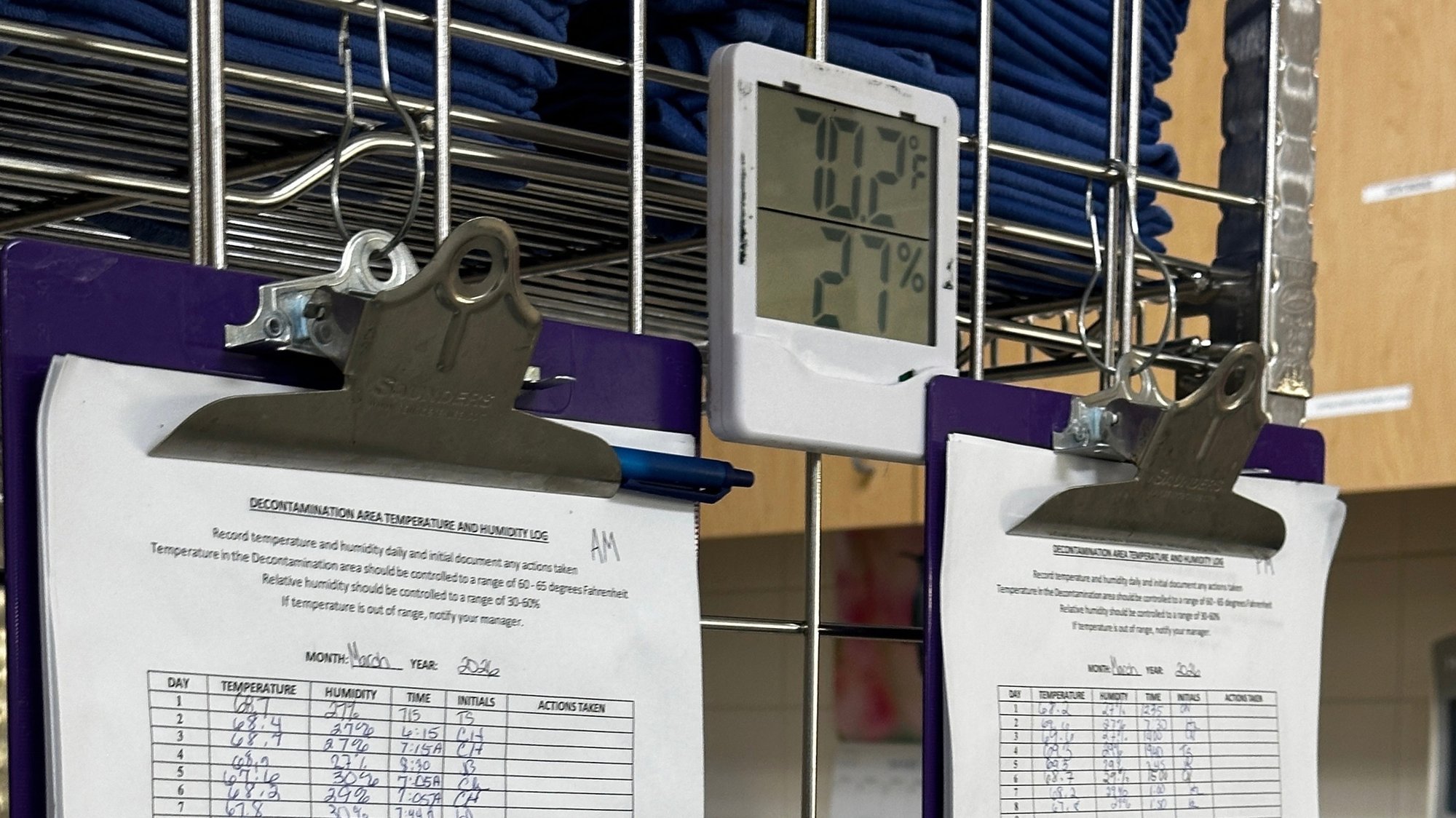

Identifying Open Door Threats in the OR to Reduce Surgical Site Infections
Operating rooms may be among the most tightly regulated environments in healthcare facilities, Sonicu helps ensure they're safe and monitored correctly.
Learn more
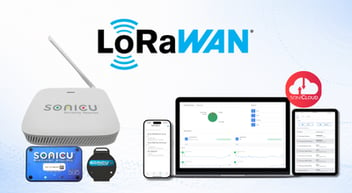
When a monitoring system loses communication, the problem is rarely the sensor. More often, the issue lies with the network carrying the data.
While many facilities default to WiFi or individual cellular connections, those choices can introduce hidden costs, ongoing maintenance requirements, and coverage limitations that only become apparent after deployment. LoRaWAN (Long Range Wide Area Network) offers a different approach.
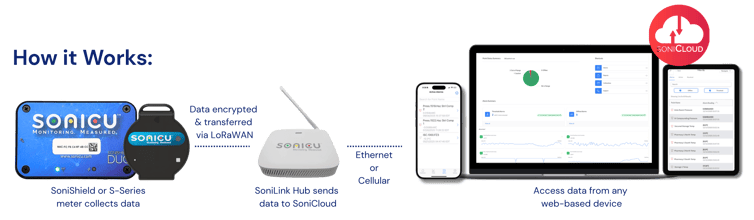
Rather than replacing cellular completely, LoRaWAN works alongside existing connectivity by aggregating sensor traffic through centralized hubs. These hubs backhaul data using a single connection such as cellular, Ethernet, or Ethernet with cellular failover for added resiliency. The result is a simpler, more reliable architecture and significant savings compared to deploying individual cellular connections for every device.
Modern environmental monitoring systems rarely rely on a single connectivity method. Facilities increasingly combine cellular, Ethernet, and LoRaWAN depending on building layout, IT policies, and operational risk tolerance. Understanding how each option performs is essential to building a resilient monitoring strategy.
Built specifically for long-range, low-power communication, LoRaWAN is exceptionally efficient at transmitting small packets of sensor data across large facilities. Sensors can operate for years on battery power, communicate across challenging building environments, and do so without relying on customer WiFi networks or heavy IT involvement.
In many cases, monitoring failures are not caused by sensor accuracy but by connectivity limitations that emerge only after deployment. Dead zones, overloaded WiFi networks, and costly cellular scaling often surface months later, turning what seemed like a simple monitoring rollout into an ongoing operational burden. This article explores how to plan for the right connectivity fit and where LoRaWAN plays a valuable role within a modern environmental monitoring strategy.
When connectivity fails in an environmental monitoring system, the impact is rarely technical alone. It can result in missed excursions, compliance gaps, product loss, increased labor costs, and unplanned after-hours response events. In regulated and temperature-sensitive environments, these failures quickly translate into operational and financial risk.
Every facility manager has experienced the frustration of unreliable connectivity; whether it’s a smartphone that loses signal in a basement, a tablet that drops WiFi in a conference room, or a laptop that struggles in a remote wing of a building. Environmental monitoring sensors can face the same challenge when they rely on the same infrastructure.
Sensors that depend on WiFi can experience points of failure in hard-to-reach areas of a facility. Weak signals, network congestion, or temporary outages can delay critical data from reaching the monitoring dashboard, which can lead to:
LoRaWAN establishes a dedicated local connection between each sensor and a shared gateway, enabling consistent communication across large facilities with minimal power use and maintenance.
This architecture reduces single points of failure while improving uptime and long-term cost efficiency, including fewer battery replacements and reduced maintenance overhead. Most importantly, it reduces your risk of compliance failure by ensuring critical environmental data is consistently captured, transmitted, and available when audits or investigations require it.
.png?width=600&height=450&name=Stay%20Ahead%20of%20Compliance%20and%20Downtime%20(1).png)
Unlike traditional device-to-network connections, LoRaWAN creates a dedicated low-power sensor network optimized specifically for monitoring data rather than general internet traffic.
LoRaWAN — short for Long Range Wide Area Network — is purpose-built for long-range, low-power communication. Multiple LoRaWAN devices can communicate directly with a single dedicated gateway designed specifically for low-bandwidth monitoring traffic.
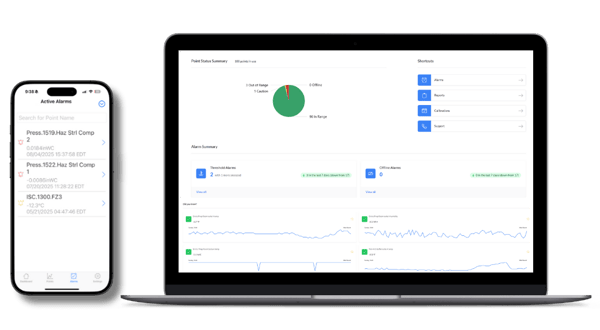
Within the Sonicu monitoring platform, LoRaWAN serves as one of several connectivity options that ensure critical environmental data reliably reaches the system for processing, alerting, and compliance workflows. This connectivity layer supports, rather than replaces, the broader platform capabilities that include real-time alarms, excursion reporting, corrective action tracking, calibration management, and audit readiness.
Sonicu’s LoRa-enabled hardware is optimized so that a single gateway can typically manage hundreds of end nodes, keeping installations simple and reducing ongoing maintenance.
The data flow is straightforward:
End Node (Sensor/Meter) → Gateway (Hub) → Server (SoniCloud)
Once data enters the platform, it is processed alongside other inputs to power automated alerts, compliance documentation, and operational workflows that help teams respond quickly and maintain audit-ready records.
Because of this architecture, LoRaWAN is particularly effective for monitoring assets in locations where WiFi or cellular signals may be weak, such as basements, interior rooms, or remote facilities. As a contained, local communication layer, it improves reliability while reducing dependence on external network infrastructure and lowering operational overhead.
When choosing the right connectivity for monitoring, facility managers must consider overall reliability, cost, and operational simplicity. LoRaWAN provides several advantages that are often overlooked.
A LoRaWAN device can operate off the same battery for up to 5-10 years. This is made possible by how the device goes into sleep mode when not taking a routine reading. When it’s time to take another reading, the device will wake up to record and then go back to sleep. The frequency of this depends on your industry standards.
WiFi typically reaches 150-300 feet indoors, depending on building layout and interference. LoRaWAN provides significantly extended coverage compared to WiFi, often delivering several times the effective range, while requiring fewer network components to maintain reliable facility-wide communication.
This means:
This allows monitoring programs to scale more easily without frequent network redesign or the need to deploy additional access points each time new assets are added.
Another often overlooked advantage of LoRaWAN connectivity is that a single gateway can support a large scale of sensors. This reduces infrastructure complexity compared to WiFi, where multiple access points may be needed to deliver the same coverage.
With WiFi, access points are usually placed to support the devices people use daily, like laptops and phones. Sensors may not be in those optimal locations, which can lead to weak connections or inconsistent data. If a sensor cannot maintain a reliable WiFi connection, the only options are moving the sensor to a better location or installing additional access points.
LoRaWAN signal allows sensors to communicate reliably across large areas and through obstacles such as walls or freezers, independent of the facility’s existing network. This means data can continue flowing even if the local internet experiences temporary outages, giving facility managers peace of mind and greater confidence in their monitoring system.
Simpler infrastructure also reduces coordination with internal IT teams, accelerating deployment timelines.
LoRaWAN operates on unlicensed radio frequencies, meaning organizations utilize their own private networks without paying recurring monthly subscription fees, which further lowers the total cost of ownership.
What this means:
LoRaWAN supports remote firmware updates, allowing bug fixes, security patches, and feature enhancements to be deployed without manual intervention. This is particularly valuable for sensors installed in ceilings, cold storage, or other hard-to-reach locations, reducing downtime and labor costs.
LoRaWAN includes end-to-end encryption with unique device keys, network session keys, and application session keys. This ensures that data is protected, devices cannot be spoofed, and compliance requirements (such as HIPAA or FDA 21 CFR Part 11) can be met.
Choosing the right connectivity depends on your facility’s needs, infrastructure, and long-term goals. Each option has strengths, and understanding how they work together helps ensure reliable environmental monitoring while minimizing hidden costs and complexity.
Modern environmental monitoring programs rarely rely on a single connectivity type. The most resilient monitoring strategies combine multiple network options, allowing each facility, asset, or monitoring point to operate on the connection best suited to its environment.
WiFi is a good option if:
Cellular connectivity works well if:
LoRaWAN is often the best choice if:
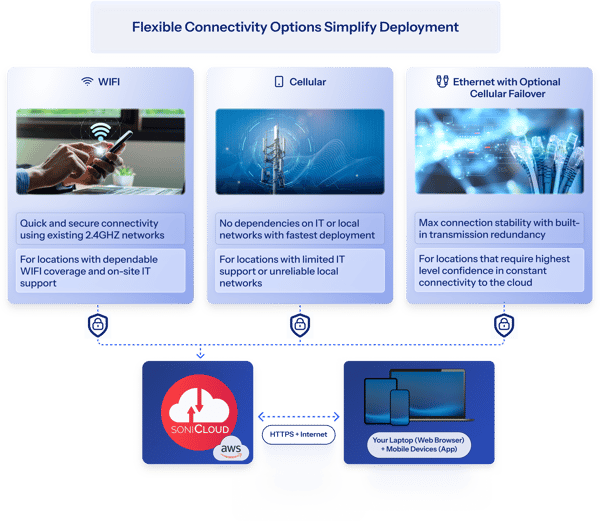
Modern monitoring platforms should not force facilities into a single connectivity model. Instead, they should deliver flexible wireless connectivity that works with your facility, allowing WiFi, cellular, Ethernet, or LoRaWAN to be deployed as operational needs evolve.
Connectivity is more than a technical detail; it directly impacts reliability, maintenance, and long-term operational costs. LoRaWAN provides a versatile connectivity option that enhances both reliability and system resilience. Unlike traditional networks that can be prone to outages or signal interference, LoRaWAN creates a robust, long-range wireless network that covers large facilities with minimal infrastructure.
By understanding the benefits and limitations of each connectivity type, facility managers can make informed decisions that save time, reduce headaches, and support more dependable monitoring outcomes.
Evaluate your facility’s connectivity needs and consider how LoRaWAN could complement your existing networks to provide a seamless, low-maintenance monitoring solution that keeps operations running smoothly.
Our specialists help determine the right mix of LoRaWAN, cellular, and network-based connectivity for your monitoring needs.
Ask to speak with a monitoring specialist to help calculate your 10-year Total Cost of Ownership.
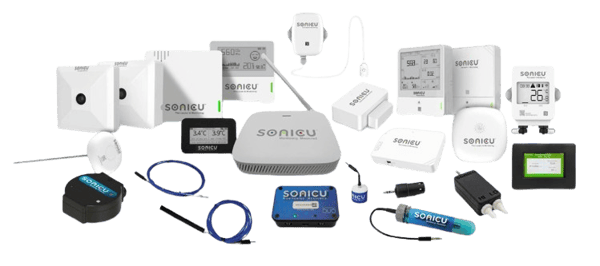
There is no single connectivity type that works best for every facility. The right choice depends on building layout, IT infrastructure, monitoring locations, and operational priorities.
WiFi works well in areas with strong network coverage and active IT support. Cellular connectivity is often preferred for distributed facilities or locations where independence from local networks is important. LoRaWAN is particularly effective for large facilities or challenging environments where long range, low power usage, and minimal infrastructure are priorities.
Many modern environmental monitoring programs use a combination of connectivity types within the same platform to maximize reliability and flexibility.
Sonicu’s SoniLink Hub — which connects via LoRaWAN and/or through your preferred cell carrier — can support up to 500 sensors at a time.
LoRaWAN sensors themselves do not need internet — they communicate with the gateway wirelessly.
However, the gateway itself needs a connection (Ethernet or cellular) to send data to the cloud. Sonciu’s SoniLink Hub supports both, with automatic cellular failover if your local network goes down.
LoRaWAN uses AES-128 encryption, which meets HIPAA's technical safeguard requirements for protecting electronic Protected Health Information (ePHI).
Sonicu's implementation includes end-to-end encryption and, because we only monitor environmental data (not patient data), our system helps facilities maintain HIPAA compliance.
LoRaWAN is the backbone of modern monitoring systems because it saves facility managers money and headaches. Its hardware runs longer thanks to low power usage, offers extended reach with minimal third-party interference compared to WiFi, and provides reliable local coverage where cellular often can’t—like basements, freezers, and interior rooms with no windows.
If you’re managing multiple facilities across different locations and different connectivity needs, your monitoring system needs to be flexible to your complex requirements.