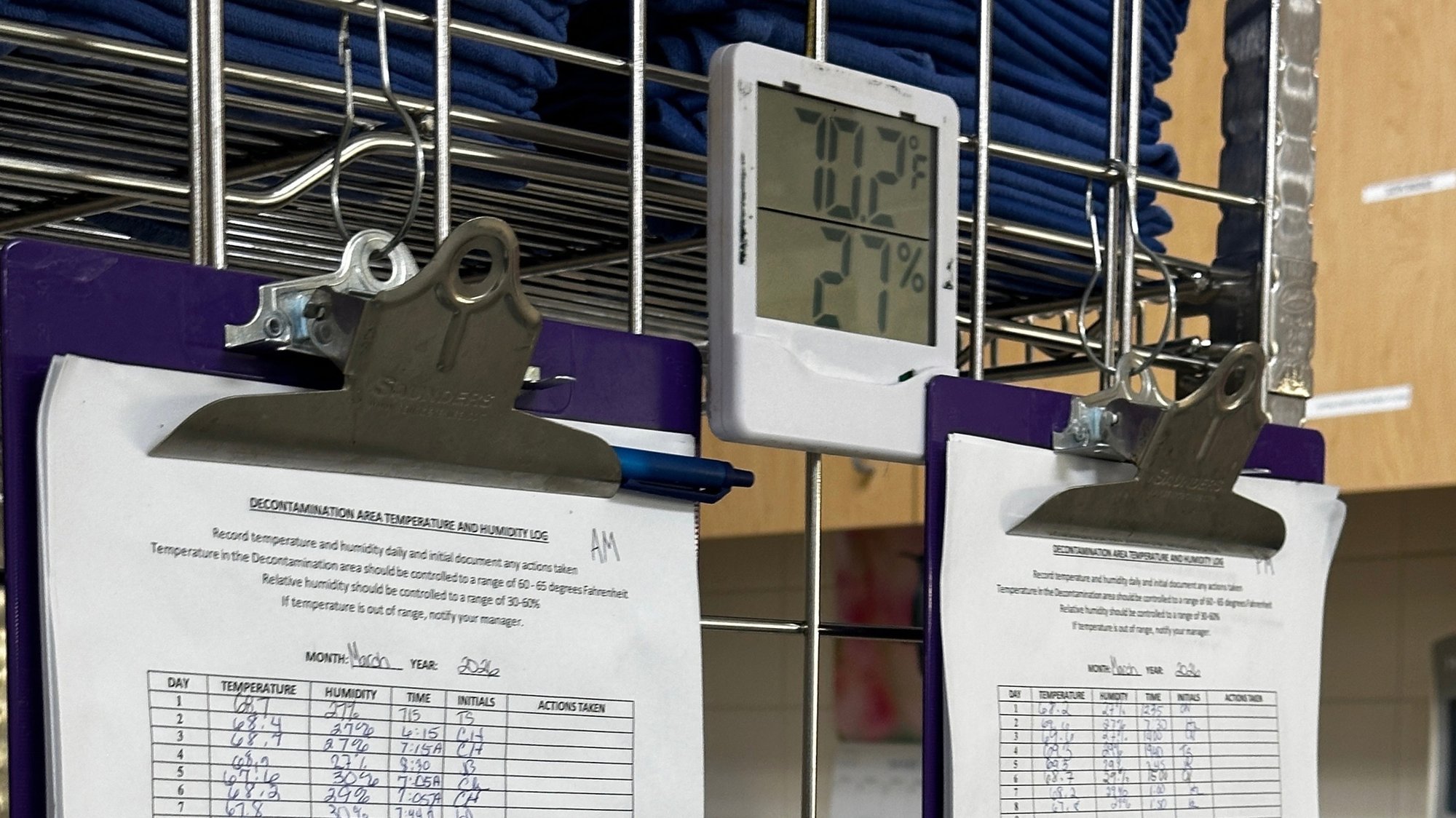

Identifying Open Door Threats in the OR to Reduce Surgical Site Infections
Operating rooms may be among the most tightly regulated environments in healthcare facilities, Sonicu helps ensure they're safe and monitored correctly.
Learn more

Temperature monitoring and temperature and humidity monitoring systems in healthcare, pharmacies, laboratories, and food service operations exist to catch problems before they become crises. But once an alarm is triggered, what happens next matters just as much as the monitoring itself.
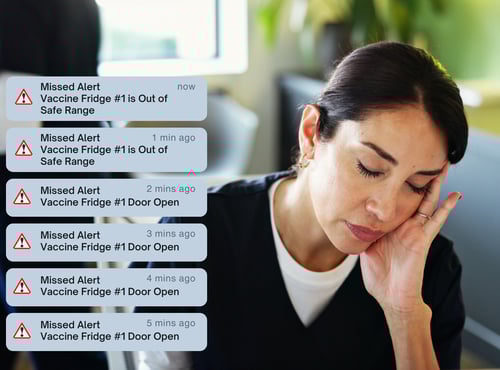
Many systems follow a simple default: if a condition deviates from the defined range, notify everyone on the contact list. On paper, that sounds thorough. In practice, it creates one of the most persistent challenges in facility operations and compliance management: alarm fatigue.
When staff are inundated with notifications, response quality declines. Critical alarms get mixed in with routine or irrelevant alerts, and over time, urgency erodes.
The pattern is predictable. When most of the alerts a team receives are inconsequential or outside of their responsibilities, people will tune them out. A 2 a.m. notification about a refrigerator door briefly held open during restocking conditions staff to discount overnight alerts. That same habit can allow a genuine compressor failure to go unnoticed until morning.
The issue lies in the structure of environmental alarm notifications.
Effective alarm management ensures alerts reach the right people quickly and that someone takes ownership when a condition requires action.
Strong alarm handling systems typically include:
Role-based routing is the starting point. A pharmacy technician should receive alerts about a vaccine refrigerator excursion in their area. A facilities engineer should be notified about HVAC deviations in a controlled environment. A compliance officer does not need to be alerted overnight unless earlier contacts have already been reached and the issue remains unresolved.
Matching alerts to responsibility, rather than broadcasting them to everyone, reduces noise and improves response time.
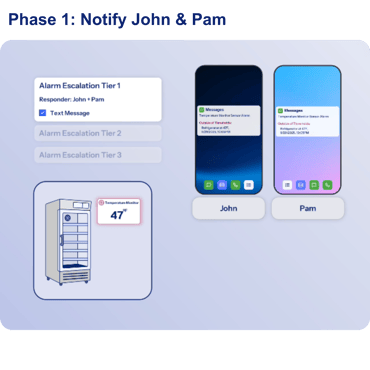
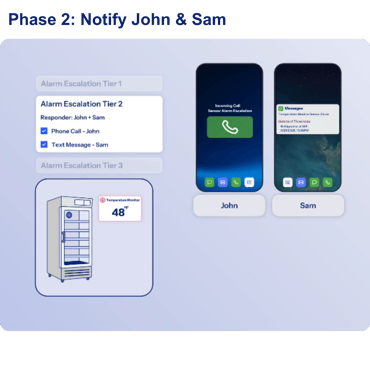
Structured escalation protocols address the most common failure point: the alert reaches the correct person, but they are unavailable to act. Effective systems define a clear sequence. If the primary contact does not acknowledge the alarm within a set timeframe, the system automatically advances the notification to the next designated contact until someone responds.
This becomes particularly important during evenings, weekends, and holidays when staff coverage changes and missed alerts carry greater consequences.
Multi-channel notification delivery accounts for the realities of how teams work. A maintenance technician on shift may respond fastest to a phone call. A laboratory manager monitoring remotely may rely on a mobile application. A quality director preparing for an audit may need email documentation. A well-designed system will support these options simultaneously.
Alarm threshold customization also plays a critical role in alarm fatigue prevention. A short temperature fluctuation caused by a refrigerator door opening while restocking is very different from a sustained excursion caused by equipment failure. Configurable buffer periods allow systems to distinguish between temporary conditions and true deviations that require intervention.
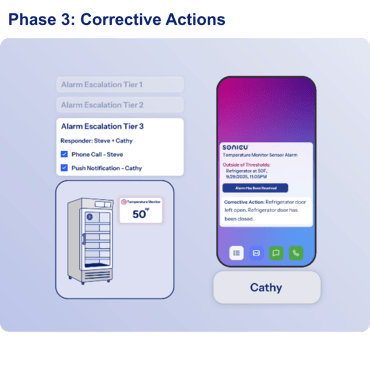
Organizations operating under CDC VFC requirements, USP chapter guidelines, FDA 21 CFR Part 11, or HACCP protocols must provide thorough documentation for each alarm.
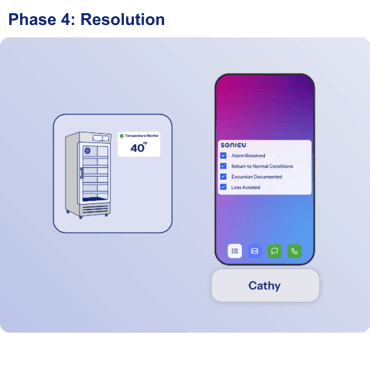
Auditors expect a complete record of each event: who was notified, when the alarm was acknowledged, what corrective action occurred, and how long the condition persisted.
In many facilities, this information is still reconstructed manually, which can be time-consuming and difficult to verify.
Automated alarm documentation removes that burden. When notifications, acknowledgments, and resolutions are automatically recorded with timestamps and user attribution, the system creates a reliable audit trail without additional staff work.
.png?width=600&height=304&name=Compliance%20Trust%20Bar%20with%20Desktop%20(1).png)
Different industries experience alarm management challenges in different ways.
In every environment, the same question applies: if a critical environmental failure occurs at 2 a.m. on a holiday weekend, is there a clear path from that alarm to someone who can act on it?
Organizations reviewing their current environmental monitoring approach can start with a few practical questions:
If these capabilities require workarounds or are missing entirely, the organization may face unnecessary compliance and operational risk.
Environmental alarm management is one area where purpose-built monitoring platforms provide significant operational value. Sonicu’s Alarm Handler is designed to support role-based routing, escalation paths, multi-channel notification delivery, and automated documentation across every monitoring point.
To see how alarm handling works in real facilities managing temperature monitoring and environmental compliance, request a quote or speak with a Sonicu specialist.