
Identifying Open Door Threats in the OR to Reduce Surgical Site Infections
Operating rooms may be among the most tightly regulated environments in healthcare facilities, Sonicu helps ensure they're safe and monitored correctly.
Learn more

Sonicu offers a comprehensive suite of monitoring solutions
that help organizations safeguard assets, automate compliance and reduce manual processes.
From protecting vaccines and research materials to safeguarding food service and facility operations, Sonicu’s monitoring applications cover temperature, humidity, pressure, and more. Whether you’re in healthcare, life sciences, food safety, or other industries, Sonicu provides visibility, compliance, and peace of mind across all your critical applications.
Designed with safety, efficiency and compliance always top of mind, we’ve evolved over a decade with continuous improvements from customer feedback. Serving the healthcare, research and food service industries.
Whether you're solving basic temperature monitoring needs or managing complex, multi-environment compliance, Sonicu’s full line of meters, sensors, and hubs has you covered.
Connect SoniCloud to the systems that power your operations. From BMS and pharmacy workflow software to lab management tools and third-party sensors, our flexible integrations help you centralize data, automate compliance, and boost operational efficiency.
Sonicu offers a comprehensive suite of monitoring solutions
that help organizations safeguard assets, automate compliance and reduce manual processes.
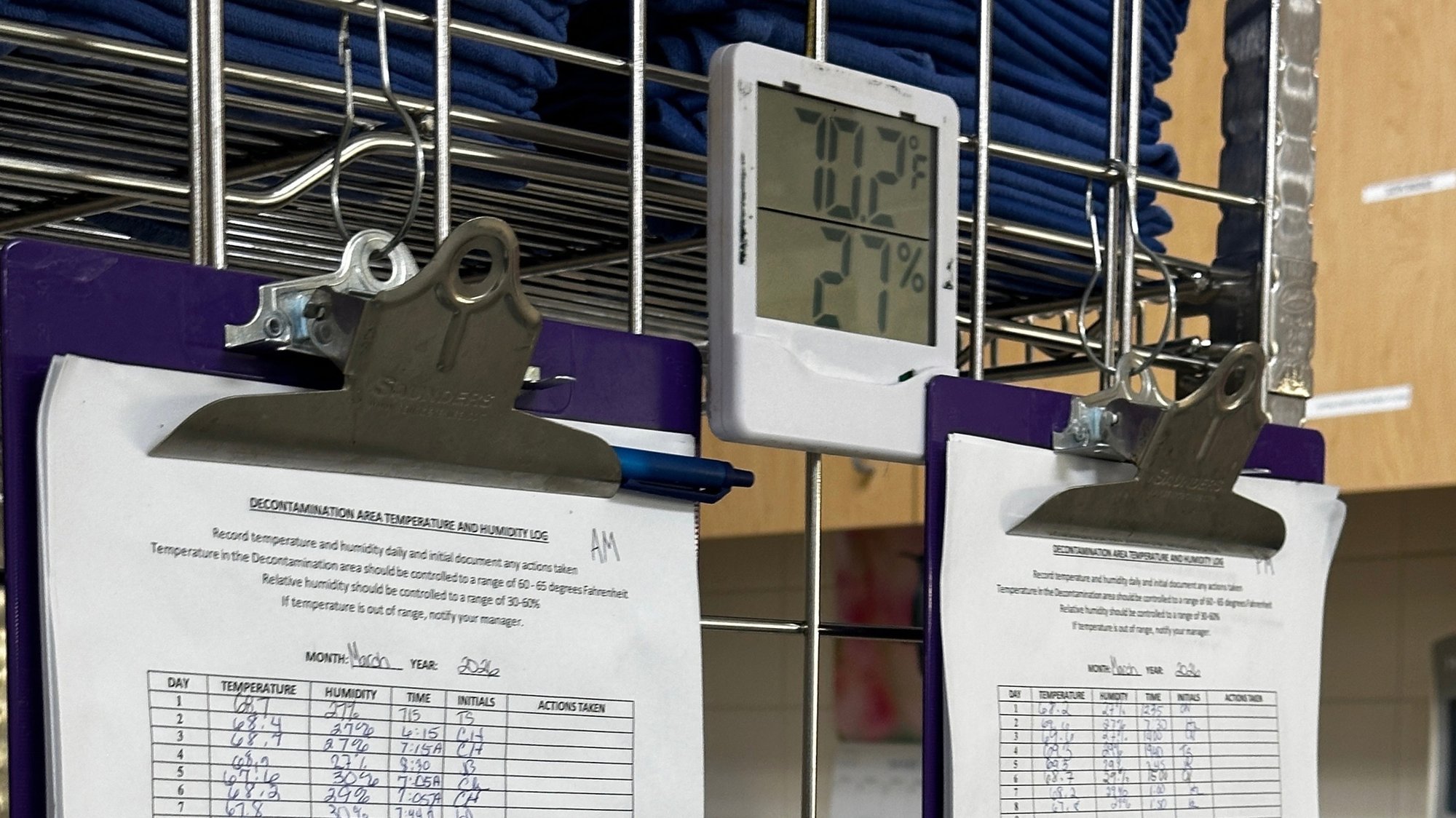
Still using paper temperature logs? Learn the hidden costs.
View Latest Blogs
What happens when a freezer housing near-priceless vaccines fails at the peak of demand for the lifesaving drug within?
Hospitals in Seattle learned the answer to this question the hard way on Friday, January 29, 2021, when a freezer housing more than 1,300 doses of the COVID-19 vaccine stopped working in the middle of the night.
Scrambling to make up for the malfunctioning freezer, several hospitals distributed hundreds of vaccines each to ensure they were administered to the public before they expired and became unsafe for use at 5:30 a.m.
This incident highlights one simple fact: if some of America’s most prestigious, well-connected, and highly-funded medical institutions can be affected by something as simple as a vaccine freezer failure, then anyone can, no matter the size of the operation.
In the global effort to combat infectious diseases such as COVID-19 and promote public health, vaccines play a crucial role in preventing illness and saving lives.
Ensuring the efficacy and safety of vaccines requires proper storage and temperature control throughout the supply chain.
While refrigeration is commonly used to preserve vaccine potency, the use of old or outdated (or unmonitored) refrigerators and freezers poses significant risks that can compromise vaccine integrity and effectiveness.
The same is true for research and food, nearly any item threatened by a temperature excursion caused by the failure of a cold storage device.
Here, we will examine the potential dangers of storing vaccines in old refrigerators, drawing on evidence from scientific studies, expert opinions, and regulatory guidelines.
Sonicu regularly hears from distraught professionals in the medical and research industries after they suffer a catastrophic loss of critical assets, thanks in part to an entirely preventable loss if only they had invested in a temperature-monitoring system.
Before delving into the specific risks associated with old refrigerators, it is essential to understand why proper vaccine storage is so important.
Vaccines are sensitive biological products that contain live or inactivated microorganisms, antigens, or adjuvants.
Exposure to inappropriate temperatures, such as freezing or excessive heat, can harm vaccine components, reduce potency, and render vaccines ineffective. The threat is so grave that the federal government mandated temperature monitoring during the rapid rollout of the COVID-19 vaccine.
You may recall stories about people rushing to a nearby hospital or clinic to get the COVID-19 vaccine when officials announced that vaccines would have to be discarded if not used within hours because they had been removed from their cold storage.
Moreover, temperature fluctuations can accelerate degradation and compromise vaccine stability, posing serious public health risks.
Sonicu helps scores of county health departments responsible for local immunization distribution with our simple, affordable vaccine monitoring kit that meets the standards set by the Centers for Disease Control and is verified by state health departments nationwide.
Refrigeration is the primary method used to maintain the potency and stability of vaccines from manufacture through administration.
According to the Centers for Disease Control and Prevention (CDC), most vaccines should be stored at temperatures between 2°C and 8°C (36°F and 46°F) to ensure optimal efficacy.
Refrigerators and freezers equipped with temperature monitoring devices, such as thermometers and data loggers, are essential for maintaining the cold chain and preventing temperature excursions that can compromise vaccine quality.
Sonicu even offers affordable mobile sensors that can track temperatures while vaccines and other medicines are en route from a distribution site to retail locations and then reconnect with a central hub when the trucks return to the distribution center, syncing the monitoring data to deliver a comprehensive temperature tracking system crucial to safe drug and vaccine delivery.
Old refrigerators may lack accurate temperature control mechanisms and insulation, leading to temperature fluctuations and inconsistent cooling.
Studies have shown that older refrigerators often fail to maintain stable temperatures within the recommended range, increasing the risk of vaccine spoilage.
Without reliable temperature monitoring, vaccines stored in old refrigerators are vulnerable to suboptimal temperatures, compromising their potency and effectiveness.
Old refrigerators may suffer from poor air circulation and humidity control, creating microenvironments that are conducive to bacterial growth and moisture accumulation.
Condensation and humidity can accelerate vaccine degradation and promote microbial contamination, posing contamination risks.
Additionally, inadequate ventilation can lead to uneven cooling and temperature differentials within the refrigerator, further exacerbating the risk of temperature excursions and vaccine spoilage.
Old refrigerators may not meet current regulatory standards and guidelines for vaccine storage and cold chain management.
Regulatory agencies, such as the CDC and the World Health Organization (WHO), provide detailed recommendations on vaccine storage equipment, including specifications for temperature-monitoring devices, storage capacity, and maintenance procedures.
However, older refrigerators may not meet these requirements, making them unsuitable for storing vaccines safely. A remote, wireless temperature-monitoring system like Sonicu is the ideal solution to help compliance professionals stay aware of their refrigerator’s status and replace an aging system before its failure threatens vaccine safety.
Old refrigerators may have limited storage capacity and inadequate shelving arrangements, making it challenging to organize and access vaccines efficiently.
Inadequate space and overcrowding can impede air circulation and temperature uniformity, increasing the risk of temperature excursions and cross-contamination.
Moreover, older refrigerators may lack modern features, such as adjustable shelves and compartments, which are essential for optimizing storage conditions and accommodating different vaccine vial sizes.
Sonicu temperature-monitoring systems and similar products play a critical role in ensuring refrigerators are safe for storing sensitive materials such as vaccines.
Our advanced monitoring solutions provide real-time temperature monitoring, data logging, and alerting, helping maintain the integrity and efficacy of stored vaccines. The system includes the glycol-buffered probes
Here's how Sonicu can help:
Sonicu systems continuously monitor the temperature inside refrigerators that store vaccines. This real-time monitoring ensures that temperatures remain within the optimal range (usually between 2°C and 8°C) to maintain vaccine potency. Any deviations from the preset temperature thresholds trigger immediate alerts, enabling timely intervention to prevent spoilage. These alerts are sent via text, email, push notification, and even phone calls, and can be tailored to each organization’s specific requirements.
Sonicu systems record temperature data at regular intervals, providing a comprehensive log of temperature fluctuations over time. This data logging feature allows healthcare providers to track temperature trends, identify potential issues, and demonstrate compliance with regulatory requirements.
Accurate documentation of temperature conditions is essential for vaccine storage, as it helps ensure accountability and traceability in the event of audits or investigations. These logs are converted into reports that are accepted by virtually every regulatory agency.
Sonicu’s cloud-based systems offer remote monitoring capabilities, allowing healthcare providers to monitor refrigerator temperatures from anywhere, at any time, from any web browser or Sonicu’s free mobile app.
This remote accessibility enables proactive management of temperature-related issues, even outside of regular business hours. Healthcare professionals can access temperature data and receive alerts via mobile devices or web-based platforms, facilitating rapid response and intervention as needed.
Sonicu systems provide customizable alerting and notification features to promptly alert users to temperature excursions or equipment malfunctions. These alerts can be delivered via email, SMS, or phone call, ensuring that responsible personnel are promptly notified of critical events.
Early detection of temperature deviations allows healthcare providers to take corrective action, such as adjusting refrigerator settings or transferring vaccines to alternative storage units, to mitigate potential damage.
Sonicu temperature monitoring systems comply with regulatory standards and guidelines for vaccine storage, such as those set by the Centers for Disease Control (CDC) and the World Health Organization (WHO).
These systems are designed to meet stringent requirements for accuracy, reliability, and data integrity, ensuring compliance with industry best practices and regulatory mandates.
Sonicu systems seamlessly integrate with existing refrigeration infrastructure, making them easy to deploy and configure in healthcare settings. These systems can be installed in various types of refrigerators, freezers, and cold storage units commonly used for vaccine storage.
Integration with existing equipment minimizes operational disruption and ensures compatibility with established workflows. Sonicu also makes it easy to connect wirelessly to virtually any Building Management (Automation) System with our CloudLink system.
Sonicu temperature monitoring solutions are scalable and adaptable to meet the diverse needs of healthcare facilities, from small clinics to large hospitals, vaccine distribution centers, and pharmacies.
Whether monitoring a single refrigerator or an entire vaccine inventory, Sonicu systems can be customized to accommodate facilities of varying sizes and configurations. This scalability ensures that healthcare providers can effectively monitor temperature-sensitive materials, such as vaccines, across their entire supply chain.
Vaccine storage failures are not hypothetical risks. If they can happen to even well-funded institutions, they can happen anywhere.
Old or unmonitored refrigeration equipment creates serious vulnerabilities, including temperature fluctuations, poor air circulation, and regulatory non-compliance, any of which can render vaccines unsafe and unusable.
Investing in a modern temperature monitoring system is the most effective way to protect your vaccine supply.
Key capabilities to prioritize include:
Whether protecting lifesaving vaccines and sensitive drugs or monitoring room conditions for patient comfort and safety, Sonicu is the trusted partner of pharmacies, hospitals, and medical facilities everywhere.
Subscribe to our newsletter for expert insights, product updates, and strategies to keep your operations running smoothly.