
Identifying Open Door Threats in the OR to Reduce Surgical Site Infections
Operating rooms may be among the most tightly regulated environments in healthcare facilities, Sonicu helps ensure they're safe and monitored correctly.
Learn more

Temperature alone doesn’t tell the whole story when it comes to workplace heat risk. A thermometer reading of 85°F (29°C) may seem manageable, but humidity, airflow, radiant heat from equipment, physical exertion, and the duration of exposure can dramatically increase the strain placed on workers.
That’s why heat stress is far more complex than a single Fahrenheit or Celsius measurement. For warehouses, manufacturing facilities, distribution centers, and other industrial environments, understanding the full picture requires monitoring multiple environmental factors that influence how conditions feel and, most importantly, how they impact employee safety.
The Occupational Safety and Health Administration (OSHA)’s April 2026 updates include an expanded list of high-hazard employers most susceptible to unsuitable heat stress levels, which pose a workplace safety hazard. According to the World Health Organization (WHO), for every degree higher than 68°F, team productivity drops 2-3%!
Excessive heat stress is more than a workplace safety issue. It also has a direct impact on your bottom line. High temperatures and humidity levels also raise quality assurance issues — especially if you store temperature-sensitive items on-site, such as food, electronics, or even medical supplies.
The challenge is that many facilities don’t know conditions have become problematic until employees begin reporting symptoms or production issues emerge.
That’s why more organizations are implementing heat stress monitoring systems that provide real-time visibility into temperature, humidity, heat index, and other environmental conditions throughout their facilities.
Heat-related illnesses can range from mild discomfort and fatigue to serious medical emergencies such as heat exhaustion and heat stroke. No matter the severity, once symptoms appear, that means employees have already been exposed to unsafe conditions for an extended period of time.
Common heat-related illnesses include heat cramps, heat exhaustion, and heat stroke. While recognizing these symptoms is important, the goal of a heat stress prevention program is to identify hazardous conditions before employees begin experiencing physical effects.
Workplace heat stress is influenced by multiple environmental and operational factors. Understanding and monitoring these variables helps organizations identify risk before conditions become unsafe.
Heat stress is the result of a combination of five key factors:
When these elements deviate from acceptable levels, it’s clear to see how heat stress not only puts people at risk but also how it directly impacts daily operations. And that’s only one part of the equation.
In warehouse and manufacturing environments, heat can accumulate quickly around production equipment, loading docks, processing lines, refrigeration systems, and areas with limited airflow. These localized hot spots often develop long before building-wide HVAC systems detect a problem.
Anyone who has worked on a production floor in July has seen this firsthand. One area of the facility can feel comfortable while another becomes noticeably warmer due to equipment, loading activity, or poor airflow. Without visibility into those changes, heat-related risks can develop long before they're recognized.
This is where workplace heat monitoring becomes critical.
Automated heat index monitoring provides real-time visibility into changing workplace conditions throughout the day. Rather than relying on periodic temperature checks, facility teams can continuously track heat stress risk and take action before conditions become hazardous.
This allows organizations to:
By monitoring heat index continuously, facilities can shift from reacting to heat-related incidents to preventing them altogether.
Many warehouses and manufacturing facilities still rely on periodic temperature checks, handheld devices, or employee observations to assess workplace conditions. There are many issues with this practice.
Conditions at 8 a.m. can look very different from conditions at 3 p.m. Facilities where dock doors open frequently, equipment generates heat, or outdoor temperatures fluctuate contribute to how work conditions feel throughout the day. Without continuous visibility, rising levels often go unnoticed until they begin impacting employees.
Automated monitoring provides that visibility without requiring someone to walk the facility, taking manual readings everywhere.
Without continuous monitoring, organizations may miss:
By combining consistent workplace practices with better environmental awareness, organizations can reduce risk, maintain productivity, and create safer working conditions.
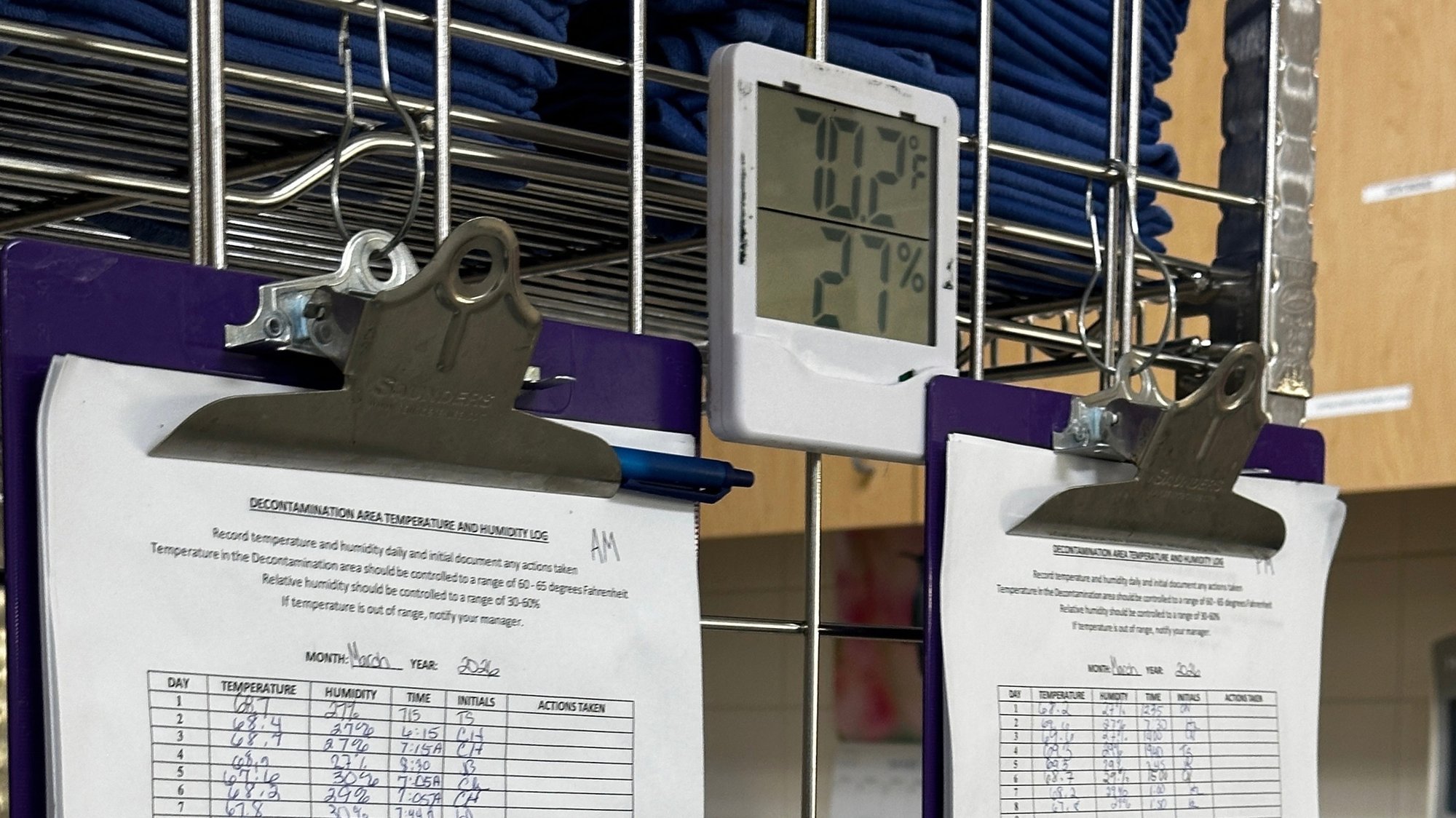
Manual temperature checks and clipboards are no longer sufficient for facilities operating under OSHA's expanded high-hazard framework. An automated heat index monitoring system removes the guesswork and human error.
Sonicu's wireless S-Series Temperature and Humidity Sensor is purpose-built for exactly this challenge.
The S-Series sensors continuously measure both ambient temperature and relative humidity, and Sonicu's SoniCloud platform automatically calculates the heat index in real time.

For many facilities, one of the biggest concerns is how difficult a monitoring deployment will be. That's why Sonicu's wireless architecture can typically be installed without extensive IT involvement. These sensors can be mounted in minutes with 3M adhesives or secured with zip ties. They can be configured instantly via a smartphone app or with the press of a button. No specialized installation technicians required.
The SoniLink Hub uses LoRaWAN’s Low Power Wide Area (LPWA) Network, which expands connectivity reach on a larger scale with simpler configuration. LoRaWAN does not require login access to your network — instead, you simply plug an Ethernet cord from your router to the SoniLink Hub.
Sonicu’s S-Series Temp & Humidity sensors are 100% wireless and connect to the SoniLink Hub, a central access point that can support up to 500 sensors wirelessly per hub.
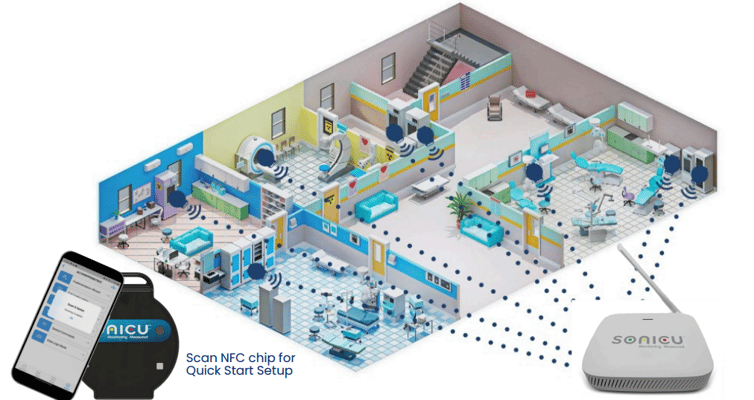
Our automated wireless monitoring technology tracks temperature and humidity 24/7, during peak business hours or after closing time. Even if your primary network goes down, Sonicu continues monitoring in the background.
When an OSHA inspector arrives, Sonicu's cloud-based logs and auto-generated reports allow you to demonstrate regulatory compliance in a few clicks, eliminating the need for manual logbooks. Sonicu reports can be configured to display temperature, humidity, heat index, dew point, and MKT data, if your industry calls for those.
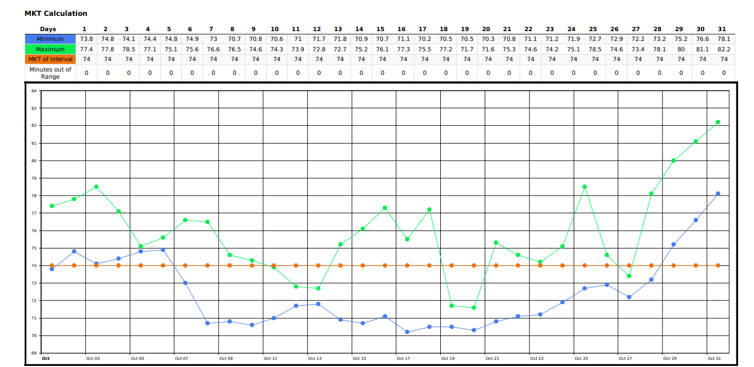
Sonicu's DataSync technology means sensors continue recording data even if the network goes down, automatically uploading any missed readings once connectivity is restored. Battery backup and cellular failover provide additional layers of protection.
When heat index thresholds are approached or exceeded, Sonicu's alerting system sends instant notifications via text, email, phone call, and push notification. Alerts can be configured to repeat and escalate to ensure the right personnel are notified and can act fast.
View real-time and historical data across all your facilities and zones from a single dashboard, accessible from a phone, tablet, or PC. You can even display your dashboard on a wall-mounted TV in the breakroom with Sonicu’s BMS integration capabilities.
Ready to connect your heat stress data to your BMS? See how CloudLink makes it seamless. Learn more from our heat stress one-pager!
The difference between reactive and proactive heat stress management comes down to visibility.
By continuously monitoring temperature, humidity, heat index, and other critical environmental conditions, organizations can move beyond manual checks and gain the information needed to protect employees before heat-related challenges arise. Whether you're monitoring a single warehouse floor or dozens of locations across a distribution network, this system adapts to your specific environment.
Contact Sonicu to learn how workplace heat monitoring can be deployed in your facility and keep your team safe year-round.
Heat stress monitoring is particularly valuable for warehouses, manufacturing facilities, distribution centers, logistics operations, and other industrial environments where employees are exposed to elevated temperatures, humidity, or physically demanding work.
While breaks, hydration, and manual tracking remain important components of a heat illness prevention program, they can be difficult to manage effectively in rapidly changing environments.
What does OSHA require for workplace heat monitoring?
OSHA's April 2026 updates expanded the high-hazard employer list and expect affected facilities to monitor environmental conditions, implement heat illness prevention programs, and maintain documentation. Automated reporting provides continuous data collection and reporting.
Does Sonicu require IT support or specialized installation?
No. Sonicu’s S-Series sensors are wireless, mount in minutes, and connect without touching your internal network. Configuration takes a smartphone app or the press of a button.
Can Sonicu monitor multiple facilities from one dashboard?
Yes. SoniCloud centralizes real-time and historical data across all locations within a single cloud-based dashboard that can be accessed from any device.