
Identifying Open Door Threats in the OR to Reduce Surgical Site Infections
Operating rooms may be among the most tightly regulated environments in healthcare facilities, Sonicu helps ensure they're safe and monitored correctly.
Learn more

Sonicu offers a comprehensive suite of monitoring solutions
that help organizations safeguard assets, automate compliance and reduce manual processes.
From protecting vaccines and research materials to safeguarding food service and facility operations, Sonicu’s monitoring applications cover temperature, humidity, pressure, and more. Whether you’re in healthcare, life sciences, food safety, or other industries, Sonicu provides visibility, compliance, and peace of mind across all your critical applications.
Designed with safety, efficiency and compliance always top of mind, we’ve evolved over a decade with continuous improvements from customer feedback. Serving the healthcare, research and food service industries.
Whether you're solving basic temperature monitoring needs or managing complex, multi-environment compliance, Sonicu’s full line of meters, sensors, and hubs has you covered.
Connect SoniCloud to the systems that power your operations. From BMS and pharmacy workflow software to lab management tools and third-party sensors, our flexible integrations help you centralize data, automate compliance, and boost operational efficiency.
Sonicu offers a comprehensive suite of monitoring solutions
that help organizations safeguard assets, automate compliance and reduce manual processes.
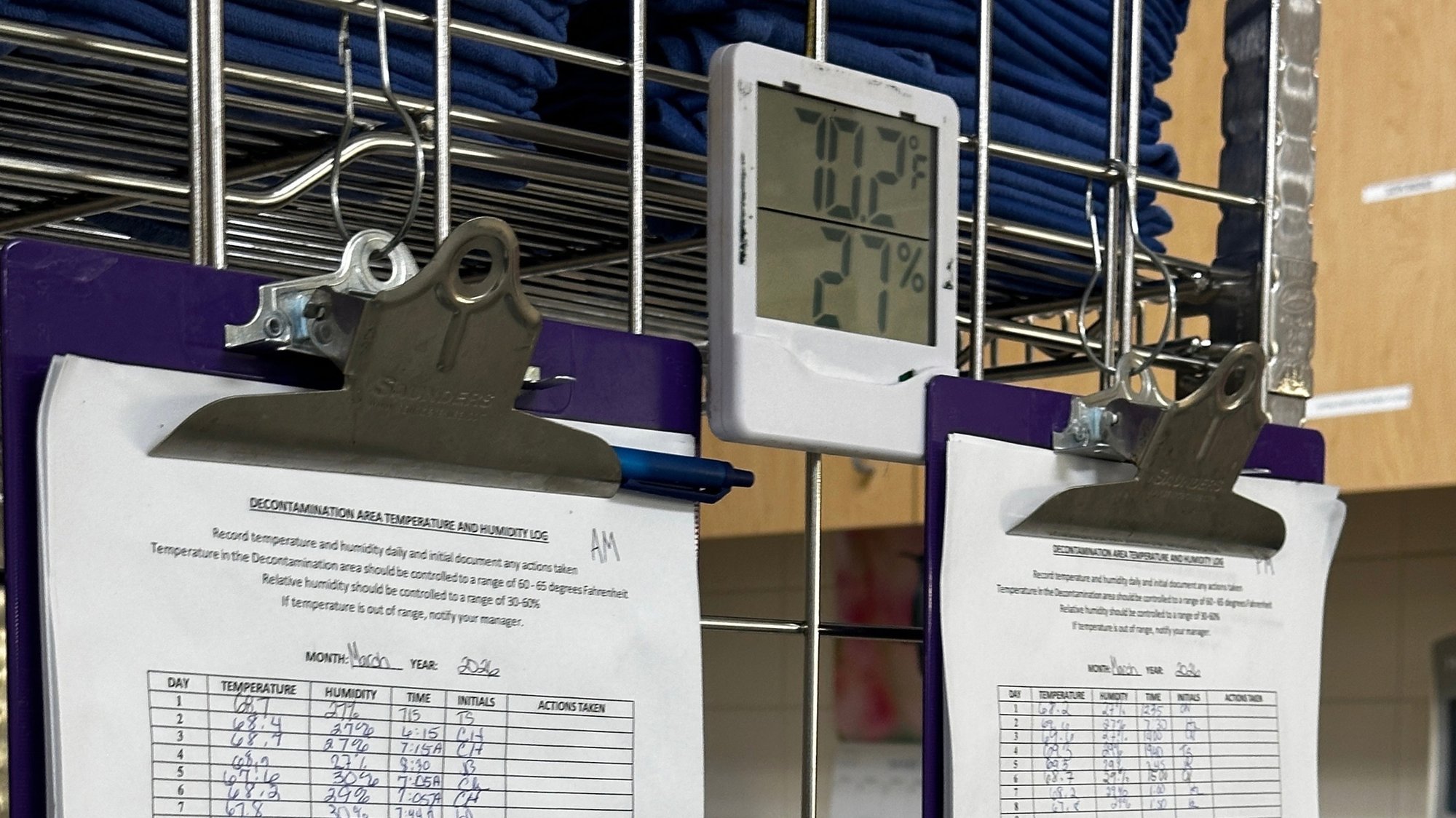
Still using paper temperature logs? Learn the hidden costs.
View Latest Blogs
CO₂ incubators play a critical role in the lab industry. These specialized units create the delicate, highly controlled conditions necessary to keep live cell lines, tissues, and cultures thriving. However, maintaining that precise balance requires constant vigilance. That's because even a minor system fluctuation can cause catastrophic damage.
All it takes is one missed temperature drift to destroy months of cell culture work. In the lab industry, losing research and specimens is a huge risk of lost revenue, loss of funding, and even a tarnished reputation.
Fortunately, with the right technology, protecting your lab from these vulnerabilities can be put on autopilot. Modern wireless temperature sensors in particular provide the constant oversight labs need in order to protect their assets without taking time out of their hectic schedule to log incubator temperatures manually — and even eliminate the need to prepare any paperwork for auditors.
This guide details the role of wireless temperature sensors in CO₂ incubator protection, compares different types of sensors available, and outlines key criteria for choosing a monitoring system built for regulated research facilities.
CO₂ incubators maintain tightly controlled environments (typically 37°C, 5% CO₂, high humidity) that keep mammalian cells, stem cells, and bacterial cultures alive. Research confirms that high temperatures and relative humidity are the primary environmental drivers of product and biological sample degradation (Gurney, Robert. 2021).
Even a deviation of 1 to 2°C can shift pH levels in culture media, thus compromising experimental results. When results are compromised by environmental conditions, it greatly impacts the marketability of the product. A simple solution to protecting your assets from excursions is to install an alarm system. However, not just any alarm system is cut for the job.
Built-in incubator alarms only sound locally. During nights, weekends, and holidays, nobody is there to hear them. A power outage or mechanical failure that goes undetected for hours can not only set your research back weeks, but could cost you thousands in lost samples (if they're replaceable).
To ensure research products and batches remain in optimal quality, it's imperative to invest in a wireless temperature monitoring system that has more sophisticated alarming tools. More on that in a little bit.
Non-buffered sensors measure air temperature directly inside the chamber. They respond quickly to changes, making them useful for detecting door openings. However, that fast response can generate frequent alerts that do not reflect actual sample temperature, since liquid media changes temperature more slowly than air.
Warm-buffered sensors use a glycol solution surrounding the probe. This thermal mass mimics how your samples respond to temperature changes, providing readings that more accurately represent culture conditions. The result: fewer nuisance alarms. Sonicu's monitoring kits include patented glycol-buffered probes that meet and exceed CDC requirements for monitoring accuracy.
CO₂ incubator sensors measure CO₂ concentration, humidity, and temperature simultaneously. This all-in-one approach is critical for cell culture, where CO₂ levels directly regulate pH in bicarbonate-buffered media. Sonicu's CO₂ incubator sensor captures all three parameters and streams data wirelessly to SoniCloud, giving you continuous visibility without opening the incubator door.
Your monitoring system needs to protect research around the clock and simplify compliance. Here are the capabilities that matter most:
If your lab operates under FDA 21 CFR Part 11, Good Laboratory Practice (GLP), or Good Manufacturing Practice (GMP) guidelines, your monitoring system must support electronic recordkeeping and audit trails. Wireless incubator monitoring that logs data automatically and stores it in a validated cloud environment makes compliance documentation straightforward.
Sonicu's platform meets FDA 21 CFR Part 11 compliance requirements, including e-signature support and IQ/OQ validation. Your team spends less time preparing for audits and more time advancing research.
Review Sonicu's 21 CFR Part 11-Compliant Features
Manual temperature logs and built-in alarms leave gaps that put research at risk. Wireless monitoring closes those gaps with continuous data collection and real-time alerts that reach you wherever you are.
Sonicu serves hundreds of life science research labs across the country, delivering simple and affordable monitoring that eliminates manual logging and automates compliance. Ready to protect your incubator environments with NIST-traceable, cloud-connected wireless sensors? Connect with a Sonicu monitoring specialist to find the right solution for your lab.
A non-buffered sensor measures air temperature directly and responds quickly but triggers more frequent alerts. A warm-buffered (glycol) sensor uses thermal mass to mirror how samples respond, providing more accurate readings and fewer false alarms.
Yes. Sonicu's CO₂ incubator sensor measures all three parameters from a single device and streams data wirelessly to SoniCloud for real-time visibility without opening the incubator door.
Sonicu's wireless platform automates data logging, maintains secure audit trails, and supports e-signatures, meeting the electronic recordkeeping requirements of FDA 21 CFR Part 11.
Sonicu sensors include battery backup and DataSync redundancy. During an interruption, the system stores data locally and forwards it to SoniCloud once restored, ensuring zero data gaps.
Subscribe to our newsletter for expert insights, product updates, and strategies to keep your operations running smoothly.