
Identifying Open Door Threats in the OR to Reduce Surgical Site Infections
Operating rooms may be among the most tightly regulated environments in healthcare facilities, Sonicu helps ensure they're safe and monitored correctly.
Learn more

Sonicu offers a comprehensive suite of monitoring solutions
that help organizations safeguard assets, automate compliance and reduce manual processes.
From protecting vaccines and research materials to safeguarding food service and facility operations, Sonicu’s monitoring applications cover temperature, humidity, pressure, and more. Whether you’re in healthcare, life sciences, food safety, or other industries, Sonicu provides visibility, compliance, and peace of mind across all your critical applications.
Designed with safety, efficiency and compliance always top of mind, we’ve evolved over a decade with continuous improvements from customer feedback. Serving the healthcare, research and food service industries.
Whether you're solving basic temperature monitoring needs or managing complex, multi-environment compliance, Sonicu’s full line of meters, sensors, and hubs has you covered.
Connect SoniCloud to the systems that power your operations. From BMS and pharmacy workflow software to lab management tools and third-party sensors, our flexible integrations help you centralize data, automate compliance, and boost operational efficiency.
Sonicu offers a comprehensive suite of monitoring solutions
that help organizations safeguard assets, automate compliance and reduce manual processes.
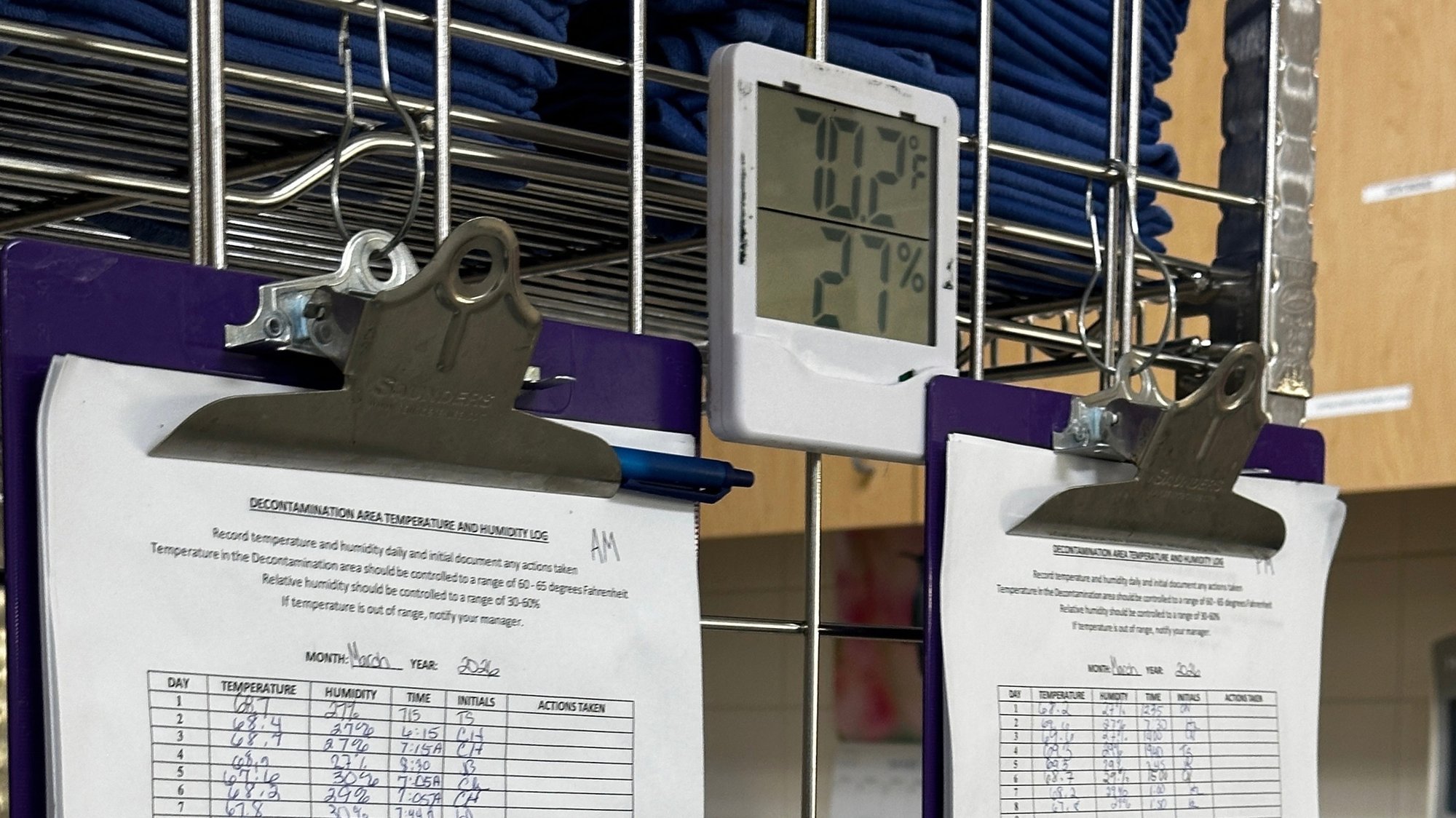
Still using paper temperature logs? Learn the hidden costs.
View Latest Blogs
The rollout of the first COVID-19 vaccines in the United States in 2020 was almost derailed because of it.
Or, to be more exact, because of a spat over how the temperatures of the potentially life-saving vaccines would be monitored once delivered.
The vaccine manufacturer, according to a report by STAT, “planned to disconnect temperature-monitoring sensors on the containers once they were delivered to health care providers — though many of the providers needed to use the boxes to store the vials for up to 30 days.
Without the monitoring systems, providers would have no way of knowing if the vials had thawed prematurely, rendering the vaccine unusable.”
In the end, STAT reported, the U.S. government’s WARP Speed project stepped in and got a deal done to ensure temperature monitoring would continue post-delivery.
The saga underlines the critical importance of temperature monitoring in industries where spoilage and deterioration can be a matter of life and death.
The precise control and monitoring of temperature conditions throughout the manufacturing, storage, and distribution processes are essential to preserving product integrity and preventing costly losses – both monetary and reputational.
The biotech and pharmaceutical industries are tasked with developing, manufacturing, and distributing life-saving medications, vaccines, and biologics. Yet they rely on a dynamic supply chain and countless individuals maintaining strict temperature controls for their drugs to maintain viability.
Scores of county health departments and hospital networks rely on Sonicu to monitor their Vaccine for Children cold storage devices. These systems leverage Sonicu’s extensive experience and reliability in delivering simple, affordable temperature-monitoring systems.
Case studies from Great Lakes Bay Health Centers, as well as SUNY Downstate and Hamilton County Health Department, highlight a handful of the hundreds of clients who rely on Sonicu to monitor their temperature-sensitive vaccines and other medical or life science assets.
Temperature monitoring plays a pivotal role in ensuring the efficacy, safety, and quality of their products.
It enables the precise control and surveillance of temperature conditions throughout the entire supply chain.
“Pharmaceutical giants continue to develop new products, including many, such as biologics developed from living organisms, which rely on cold storage throughout their supply chains,” according to the American Journal of Transportation, citing a 2019 IQVIA Institute study.
“Experts say the biopharmaceuticals industry loses $35 billion a year due to failures in temperature-controlled logistics and that temperature excursions account for 80 percent of these supply-chain problems.”
That’s to say nothing of what happens to these materials once they arrive at healthcare facilities and pharmacies, which then become responsible for storing them safely until they are ultimately administered to patients.
“If you look at the pipeline of new drugs that are being developed, approximately 20 percent are gene- and cell-based therapies, and there’s a high probability that they will require close temperature control,” said Eric Tichy, PharmD, the vice chair of pharmacy formulary for the Mayo Clinic Health System, in an article in Specialty Pharmacy Continuum.
“We are moving into a therapeutic era where the cold chain and ultra-cold chain will become increasingly important.”
In an informal ASHP (American Society of Health-System Pharmacists) survey of hospitals with more than 300 beds, more than 90 percent of respondents indicated that they had to acquire additional cold space storage (refrigerators/freezers), with an "average of four additional devices purchased,” the article noted.
“More than 75 percent reported they had to quarantine drug products related to a cold chain issue, such as a known or suspected temperature excursion, and more than 50 percent of those experienced a product loss.”
Maintaining specific temperature ranges is crucial for preserving the efficacy and stability of biologics, vaccines, and other temperature-sensitive products.
Maintaining strict temperature controls within the ranges prescribed by the U.S. Food and Drug Administration (FDA) is essential to prevent product degradation and ensure consistent therapeutic outcomes.
Not only can Sonicu deliver alerts via text, email, push notification, and even phone calls to ensure your team is immediately aware of a potential temperature excursion, but our intuitive software automates the creation of reports that satisfy nearly every regulatory agency that audits healthcare and life science organizations.
Far too many organizations turn to a wireless remote temperature-monitoring provider after they suffer asset loss due to a temperature excursion or are cited by a regulatory agency.
Yet more are investing preemptively to stave off the threats posed by faulty freezers, manual logging errors, and oversights.
Here are some of the reasons why temperature monitoring is so important to these industries, and some of the adverse outcomes that can result from a failure to properly monitor sensitive biological and pharmaceutical materials:
Sonicu’s temperature monitoring solutions offer a comprehensive suite of tools to address the unique temperature-monitoring needs of the biotech and pharmaceutical industries.
Here's how Sonicu's technology can help:
Here are some case studies that help underline how Sonicu is helping healthcare facilities, hospitals, and pharmacies effectively monitor temperatures:
Temperature monitoring is not merely a regulatory requirement but a fundamental imperative that underpins the mission of the biotech and pharmaceutical industries to improve human health and well-being.
Sonicu's temperature monitoring solutions offer a comprehensive and technologically advanced approach to temperature management in the biotech and pharmaceutical industries.
By leveraging Sonicu's platform, healthcare facilities, hospitals, pharmacies, and other organizations can ensure the integrity, safety, and compliance of their temperature-sensitive products throughout the entire supply chain, ultimately enhancing patient safety and advancing public health objectives.
Subscribe to our newsletter for expert insights, product updates, and strategies to keep your operations running smoothly.